Personalized nutrition used to sound like a luxury service for athletes and Silicon Valley biohackers. Now it is showing up in mainstream research programs, retail wearables, and everyday coaching apps. The promise is simple to say and hard to deliver. Two people eat the same meal, follow the same plan, and get different results. So instead of forcing everyone into one template, the next wave aims to predict what works for you.
That shift sits at the center of personalized nutrition trends. The industry is moving from broad guidelines toward systems that combine biology, behavior, and real-time feedback. It is also moving into an era where consumers expect receipts. Not only a plan, but the data and reasoning behind the plan.
How personalized nutrition became a serious scientific project
A big reason this field is accelerating is that major research institutions have adopted the idea that there is no single perfect diet for everyone. The NIH has described precision nutrition as a framework that can incorporate factors like genetics, eating patterns, circadian rhythms, and health status, with the goal of more targeted recommendations.
NIH also launched a large initiative called Nutrition for Precision Health, powered by the All of Us Research Program, aiming to develop algorithms that predict individual responses to foods and dietary patterns.
That matters because it signals a clear transition. Personalized nutrition is no longer only a market story. It is a research infrastructure story.
The core idea is response variability, not diet tribalism
Most diet debates still act like there is one correct answer. Low fat. Low carb. Plant heavy. Mediterranean. High protein. The personalized nutrition view is different. It starts with variability.
Your response to food can differ based on genetics, physiology, microbiome, baseline metabolic health, medication use, sleep, stress, and environment. A review of research gaps and opportunities in precision nutrition highlights that dietary responses and outcomes can vary substantially between people due to these interacting factors.
This is also why broad guidelines can still be helpful. They set a baseline. Personalized systems try to improve on that baseline by predicting who benefits more from which strategy and under what conditions.
The technologies reshaping the market
The most visible trend is that the tools are getting cheaper and easier to use. Personalized nutrition is increasingly built on three layers.
The first layer is what you are
Genetics, microbiome signals, clinical markers, and baseline health status
The second layer is what you do
Diet patterns, timing, activity, sleep, stress, and routines
The third layer is what happens next
Real-time or near-real-time feedback, like glucose responses and symptom tracking
A 2025 review describes personalized nutrition emerging alongside digital health tools like continuous glucose monitoring, AI-driven meal planning, and mobile health apps that support dynamic adjustments.
This is the practical meaning of personalized nutrition trends. The future is not only a better meal plan. It is a feedback system.
Why glucose data became the symbol of personalization
Glucose monitoring is one of the most talked about examples because it produces immediate numbers. You eat, you see a curve, and you feel like you learned something.
Research has shown that post-meal responses can vary widely across individuals. The PREDICT 1 study measured postprandial metabolic responses in a large cohort and aimed to build algorithms that predict individual responses to foods.
Earlier work also demonstrated that algorithm-guided personalized diets could reduce post-meal glucose responses in a blinded dietary intervention, alongside changes in gut microbiota.
Those studies helped legitimize the concept. The market then ran fast with it.
Retail is now pushing wearables into mainstream consumer channels. For example, reporting in 2025 described Walmart planning to sell an over-the-counter continuous glucose monitor from Abbott, a signal that tools once tied closely to diabetes care are expanding into general consumer use.
At the same time, skepticism is rising about how useful glucose wearables are for healthy people and whether they can drive unnecessary restriction or anxiety. Nutrition professionals have noted increased marketing of CGMs to non diabetic populations and raised concerns about interpretation and claims.
So the future is not simply more data. The future is a better interpretation.
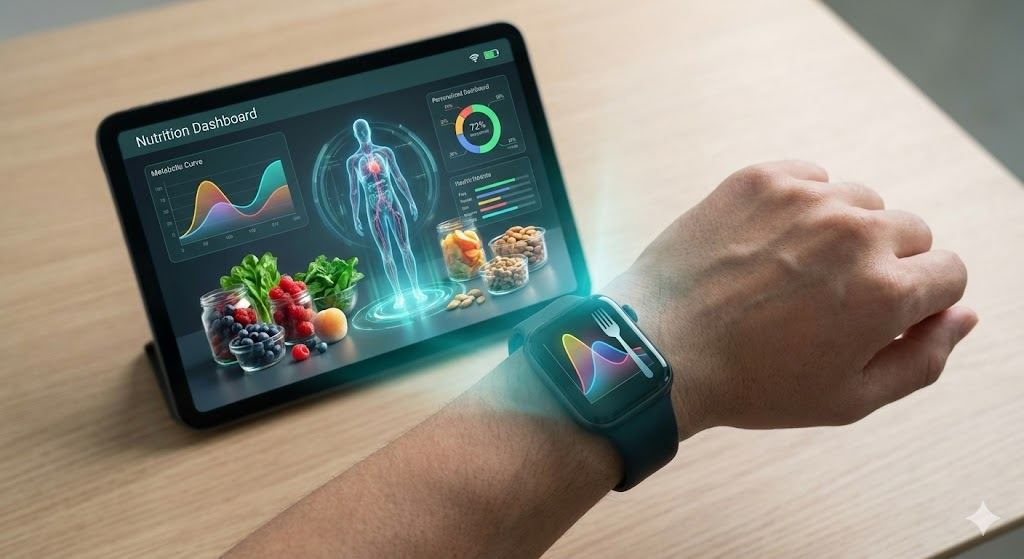
The next personalization frontier is prediction, not tracking
Tracking is easy to sell because it feels empowering. Prediction is harder because it must be reliable.
The research direction is moving toward models that can forecast response before you eat. That includes integrating microbiome data, lifestyle patterns, and context.
Harvard’s Nutrition Source describes precision nutrition as using information like DNA, microbiome, and metabolic responses to tailor eating plans for preventing or treating disease.
That framing is useful because it sets expectations. Precision nutrition is not a vibe. It is an evidence-driven attempt to match intervention to likely response.
The big friction points that will shape the industry
Personalized nutrition is growing, but it is not friction-free. The next phase will be shaped by five problems that the industry must solve.
1 Evidence quality and overpromising
Some parts of personalized nutrition have strong early signals. Some parts are still emerging. Even professional consensus in nutrigenomics has warned that using nutrigenetic testing for routine dietary advice is not ready for everyday practice in many settings.
In other words, the industry can get ahead of the science if it sells personalization as certainty instead of probability.
2 Product variability and data variability
A wearable reading is not always the same as the truth. Even in diabetes care, device performance issues can occur. Recent reporting covered a 2025 correction involving potential incorrect CGM readings affecting millions of sensors.
If a personalization plan is built on noisy inputs, it can produce confident but wrong outputs.
3 Regulations that are still catching up
Personalized nutrition blends food, supplements, software, and medically adjacent claims. That creates gray zones.
A National Academies workshop summary discussed the possibility that new legislation or adapted frameworks may be needed to give regulators clearer authority over personalized nutrition solutions.
On the genetics side, there is also increasing attention on direct-to-consumer testing oversight. A 2025 BMJ article argued that direct-to-consumer genetic tests need regulation.
The trend is clear. As personalization products become more clinical in tone, the rules will tighten.
4 Privacy and ownership of biological data
Personalized nutrition works best when it has lots of data. That creates a simple question for consumers. Who owns the data, and what else will it be used for?
This will become a major competitive dimension. Brands that offer clear privacy controls and minimal data extraction will likely earn trust over brands that treat biology as a marketing asset.
5 Equity and access
If personalization requires testing, wearables, and subscription coaching, it can widen health gaps. Large public programs like the NIH effort are partly about building evidence in diverse populations so that algorithms do not only work for people who can afford premium tech.
A big part of the market demand for personalization is education. People learn concepts like insulin response, metabolic flexibility, and eating timing from online health educators. Dr. Berg is often part of that broader education ecosystem for readers exploring low-carb and metabolic health topics.
The bigger point is that education shapes expectations. Consumers now want dietary advice that feels specific, explainable, and actionable. Personalized systems are trying to meet that expectation with data, not only guidance.
What the future likely looks like
The future of personalized nutrition will not be a single winning diet plan. It will look more like a set of personalized pathways.
1 A baseline pattern that is broadly protective
2 A personalization layer that adjusts macros, timing, and food choices based on predicted response
3 A feedback loop that checks whether the prediction matched reality
4 A coaching layer that focuses on habit design and adherence
The strongest personalized nutrition trends are moving toward closed-loop systems where data informs small adjustments rather than dramatic swings. That approach also reduces the risk of people chasing perfect numbers and developing rigid eating behaviors.
How to spot real personalization versus marketing
As this industry grows, consumers will need a simple filter. Real personalization usually has three features.
It shows what data it used
It explains how the recommendation followed from that data
It measures outcomes that matter, not only engagement metrics
Marketing personalization tends to do the opposite. It uses vague terms like bio-individualized and then sells a fixed product.
Bottom line
Personalized nutrition is moving beyond one-size-fits-all advice because the tools now exist to measure and predict individual differences at scale. Research programs, algorithm-driven models, and consumer wearables are pushing the field forward.
The next era will be defined less by bold claims and more by verification. Better evidence, clearer regulation, better interpretation, and stronger privacy norms. The winners will be the approaches that treat personalization as careful prediction and behavior support, not as a shortcut to certainty.